Incremental Testing: Run Only Affected Tests
If you changed one file, why run 500 tests?
Incremental testing — also known as test impact analysis or change-based testing — means running only the tests affected by your changes. It’s the same principle behind make: track dependencies, rebuild only what’s stale.
In other ecosystems this is called “affected tests” (Nx, Bazel, Pants) or “selective testing”. pytest-incremental (2011) and testmon have been doing this for pytest. rut brings it to unittest with a focus on simplicity and AI coding workflows.
The dependency graph
rut builds a dependency graph from your static imports. It tracks dependencies at the module level, not individual test functions. If a module you changed is imported by a test module, the entire test module runs.
If you change currency.py, which tests need to run? All of them — every module imports currency. If you change account.py? Only test_account, test_transaction, and test_report. test_currency doesn’t depend on account — skip it.
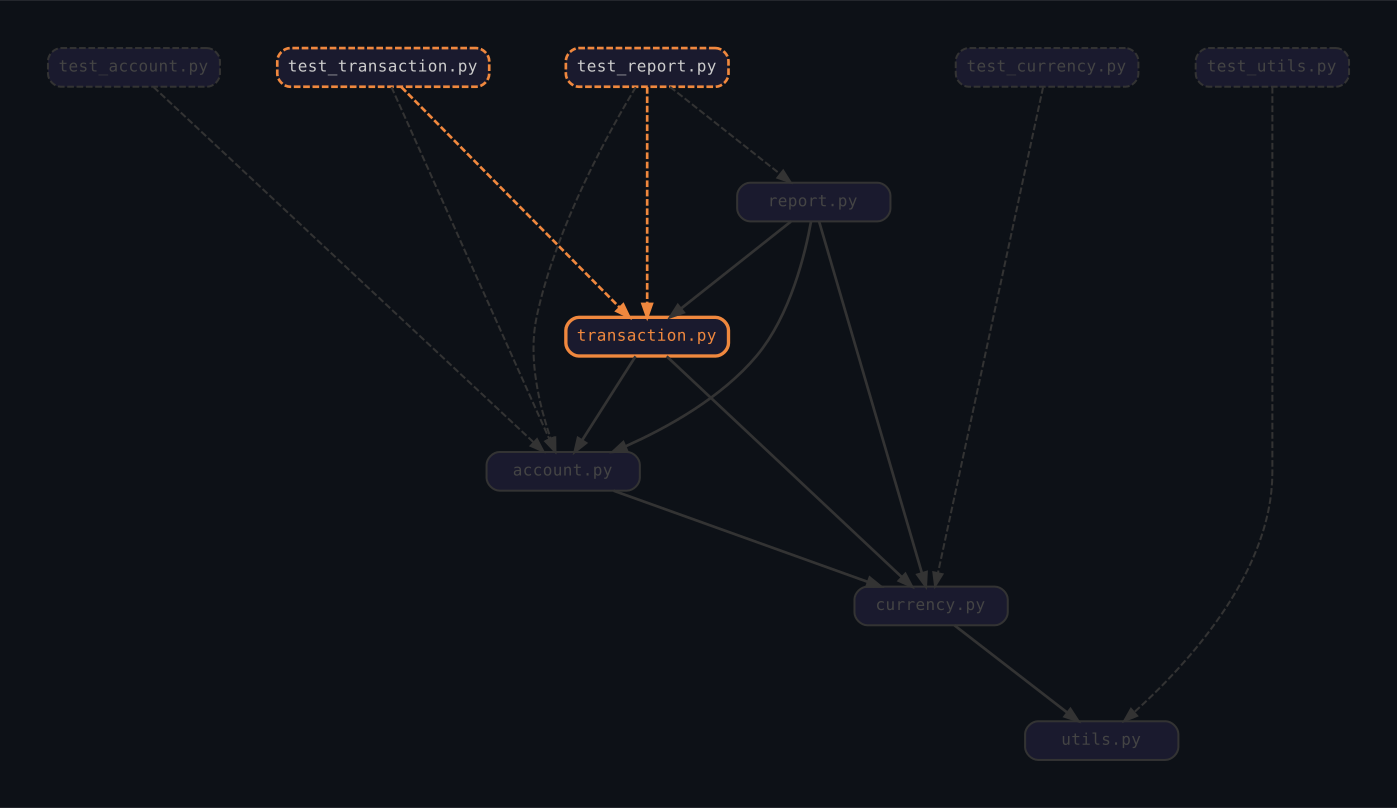
How rut tracks this
First run builds the graph:
$ rut
tests/test_utils.py ....                [ 16%]
tests/test_currency.py ......           [ 41%]
tests/test_account.py .....             [ 62%]
tests/test_transaction.py .....         [ 83%]
tests/test_report.py ....              [100%]

────────────── 24 passed in 5.4s ──────────────
Subsequent runs with --changed check what’s stale:
$ rut --changed
tests/test_utils.py ⚡ 4 up-to-date     [ 16%]
tests/test_currency.py ⚡ 6 up-to-date  [ 41%]
tests/test_account.py .....             [ 62%]
tests/test_transaction.py .....         [ 83%]
tests/test_report.py ....              [100%]

────────────── 14 passed, 10 up-to-date in 4.8s ──────────────
14 tests instead of 24. Same confidence, less time.
What counts as “changed”?
rut hashes every file in source_dirs and compares against the last successful run:
- Source files:
finance/*.py— if changed, tests depending on them run - Test files:
tests/*.py— if changed, that test module runs
$ rut --changed --debug
Changed modules: finance.account
Affected tests: test_account, test_transaction, test_report
Skipping: test_utils, test_currency (up-to-date)
The cache
rut stores dependency info in .rut_cache/:
.rut_cache/
└── file_hashes.json   # SHA256 hashes of all tracked files
Add to .gitignore. The cache is only updated after a successful test run — if tests fail, the cache stays stale so the same tests run again next time.
When incremental testing doesn’t help
Everything depends on everything: If your currency.py is imported by every module, changing it runs all tests. This is feedback about your architecture — maybe that module is doing too much.
Heavy test fixtures: If setup is slow (database, network), skipping tests doesn’t save much. Focus on faster fixtures.
See how the import graph works for more details on what is and isn’t tracked.
Combining with dependency ordering
rut does both:
- Order: Foundational tests first (fail fast)
- Filter: Skip unaffected tests (save time)
$ rut --changed
# 1. Determines affected tests from graph
# 2. Orders them by dependency (foundational first)
# 3. Runs only what's needed